
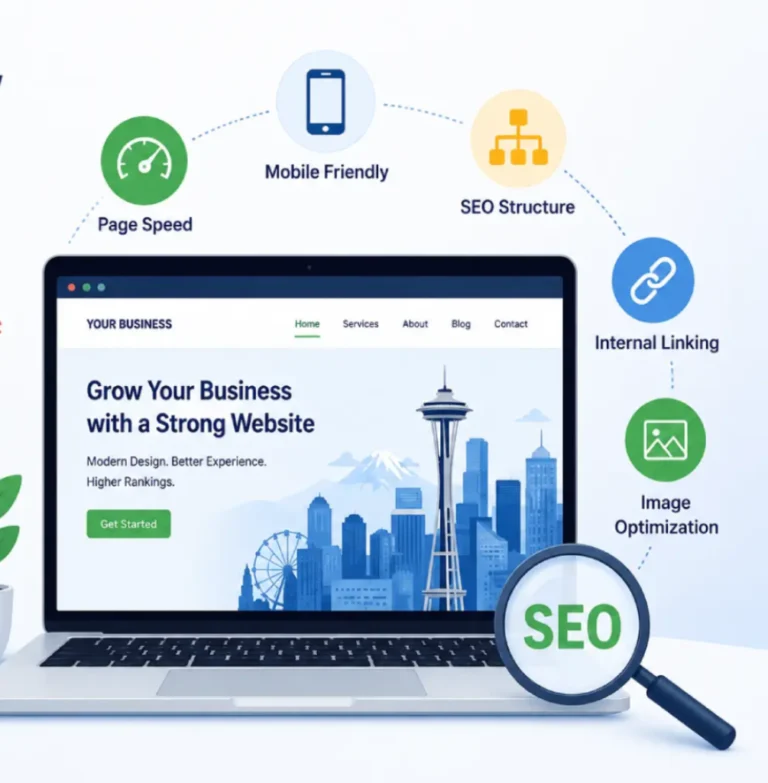
A good website should not only look attractive; it should also help your business appear in front of the right customers on Google. For local companies, SEO-Friendly Web Design combines clean design, strong website structure, fast loading speed, mobile usability, optimized content, and local SEO elements. When design and SEO work together, your website has a better chance of ranking, attracting visitors, and generating leads.
Many Seattle businesses invest in a new website but forget to plan SEO from the beginning. This can lead to beautiful pages that do not perform well in search results. A professional Seattle web design company should build your website with both users and search engines in mind.
Why Design and SEO Work Together
Website design affects how users interact with your business, while SEO affects how easily people can find your website online. If your design is confusing, slow, or difficult to use on mobile, visitors may leave quickly. If your SEO structure is weak, Google may struggle to understand your pages.
SEO-Friendly Web Design helps solve both problems. It creates a website that looks professional, loads quickly, is easy to navigate, and supports better search visibility. For Seattle businesses, this is important because local customers often compare multiple companies before calling, booking, or requesting a quote.
Website Structure
Website structure is one of the most important parts of SEO-friendly design. Your website should have clear pages for important services, a simple navigation menu, clean URLs, and internal links that guide users to related content. A confusing structure can make it harder for visitors and search engines to understand your business.
A strong website structure should make your main services easy to find. For example, service pages, location pages, blog posts, and contact pages should be connected naturally. This helps users move through your website and helps Google understand which pages are most important.
Page Speed
Page speed plays a major role in user experience. If your website takes too long to load, visitors may leave before reading your content. This can reduce engagement and hurt your ability to generate leads.
During the design process, images should be compressed, unnecessary scripts should be reduced, layouts should be clean, and hosting performance should be considered. A fast website can improve user experience and support better SEO performance.
Important speed improvements include:
- Compressing images before uploading them.
- Removing unused plugins, scripts, and heavy code.
- Using clean layouts that load smoothly on mobile and desktop.
- Testing page performance before publishing the website.
Mobile-First Design
Many local customers search from mobile phones when they need services quickly. A mobile-first website should be easy to read, simple to navigate, and fast to load on smaller screens. Buttons should be easy to tap, forms should be simple, and service information should be clear.
SEO-Friendly Web Design should always include responsive layouts. This means your website should work properly on phones, tablets, laptops, and desktops. A poor mobile experience can make users leave and choose another business.
Internal Linking
Internal linking helps connect related pages across your website. It guides visitors to useful information and helps search engines understand the relationship between your pages. When used properly, internal links can support important service pages and improve website structure.
For example, if you are writing about SEO-friendly design, it makes sense to link to Seattle SEO services. This helps users learn more about SEO while also supporting your service page.
Good internal links should feel natural. They should not be forced or repeated too many times. Each link should help the reader find useful information related to the topic.
Heading Structure
Headings help organize your website content. They make your pages easier to scan and help search engines understand the main topics on each page. Every important page should have one clear H1, followed by proper H2 and H3 headings where needed.
A strong heading structure improves readability and SEO. It also helps users quickly find the information they need. For local service pages, headings should clearly explain the service, location, benefits, and next steps.
Heading structure should include:
- One clear H1 that includes the main topic.
- Helpful H2 headings for important sections.
- Natural keywords without keyword stuffing.
- Readable content that answers user questions clearly.
Image Optimization
Images can improve the look of your website, but they should also be optimized properly. Large image files can slow down your website, and missing alt text can reduce SEO value. Every important image should be compressed and named clearly before uploading.
Image alt text should describe the image in a simple and natural way. For example, if the page is about SEO-Friendly Web Design, the featured image alt text can include that phrase if it accurately describes the image.
Local SEO Elements
Seattle businesses should also include local SEO elements in their website design. This can include location-focused content, service area details, local internal links, contact information, map placement, and pages that clearly explain where the business operates.
For stronger local performance, businesses can also use Seattle website optimization. Local optimization helps improve page structure, location relevance, internal linking, and user experience for Seattle-based searches.
Why SEO Should Start During Design
SEO should not be added after the website is complete. It should be part of the planning process from the beginning. When SEO starts during design, your website can be built with the right page structure, headings, content sections, image strategy, speed optimization, and internal linking.
If SEO is ignored during design, you may need to fix many issues later. This can include rewriting content, changing URLs, improving speed, restructuring pages, and adjusting mobile layouts. Planning early saves time and helps your website perform better from the start.
Businesses building a new site or improving an existing one should work with a team that understands both design and SEO. This helps create a website that looks professional and supports long-term growth.
Final Thoughts
SEO-Friendly Web Design helps Seattle websites rank better by improving structure, speed, mobile experience, internal links, headings, images, and local SEO signals. A website should not only impress visitors visually but also help them find information and take action.
If your current website looks good but does not bring enough traffic or leads, it may need better SEO planning. iLocal helps Seattle businesses build websites designed for visibility, usability, and lead generation.